
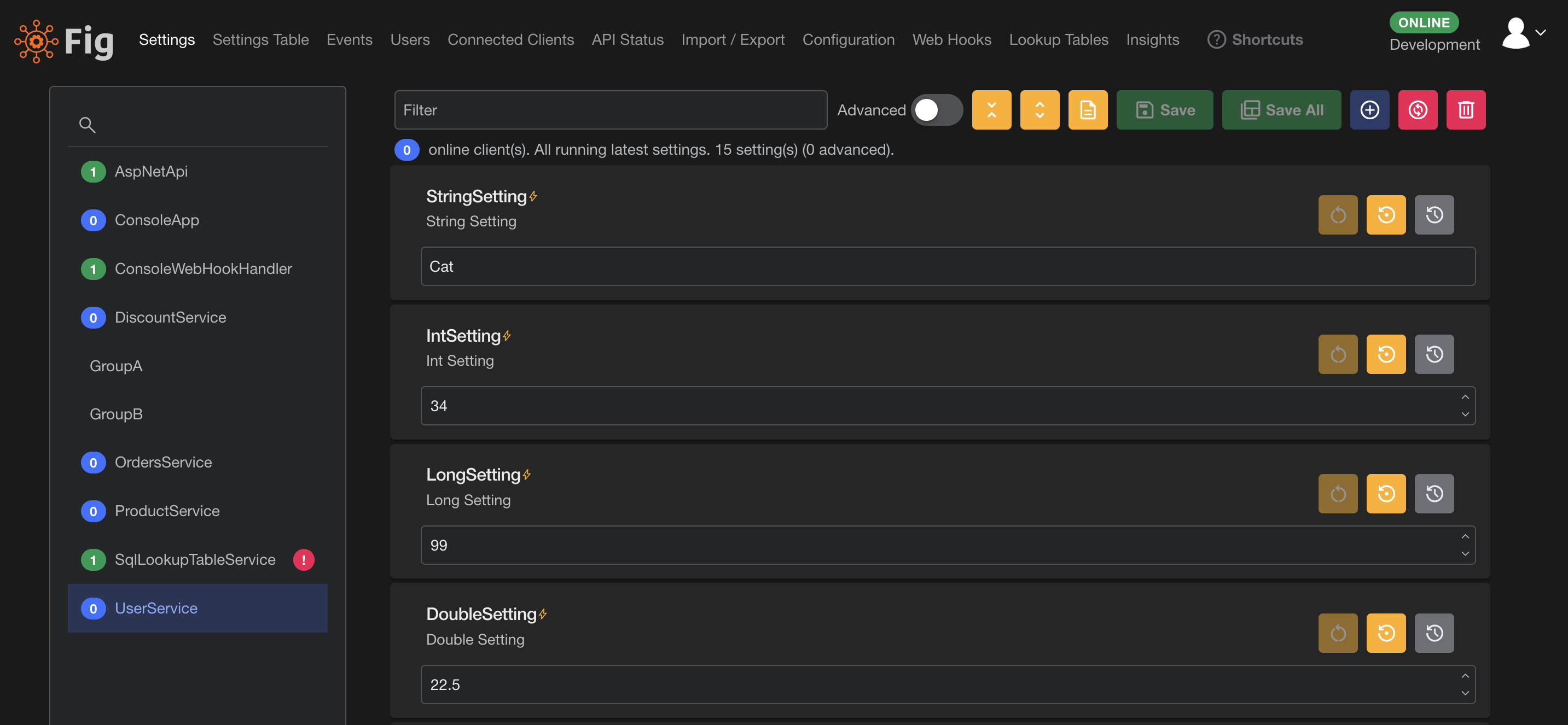
Waiting for poll
Integration
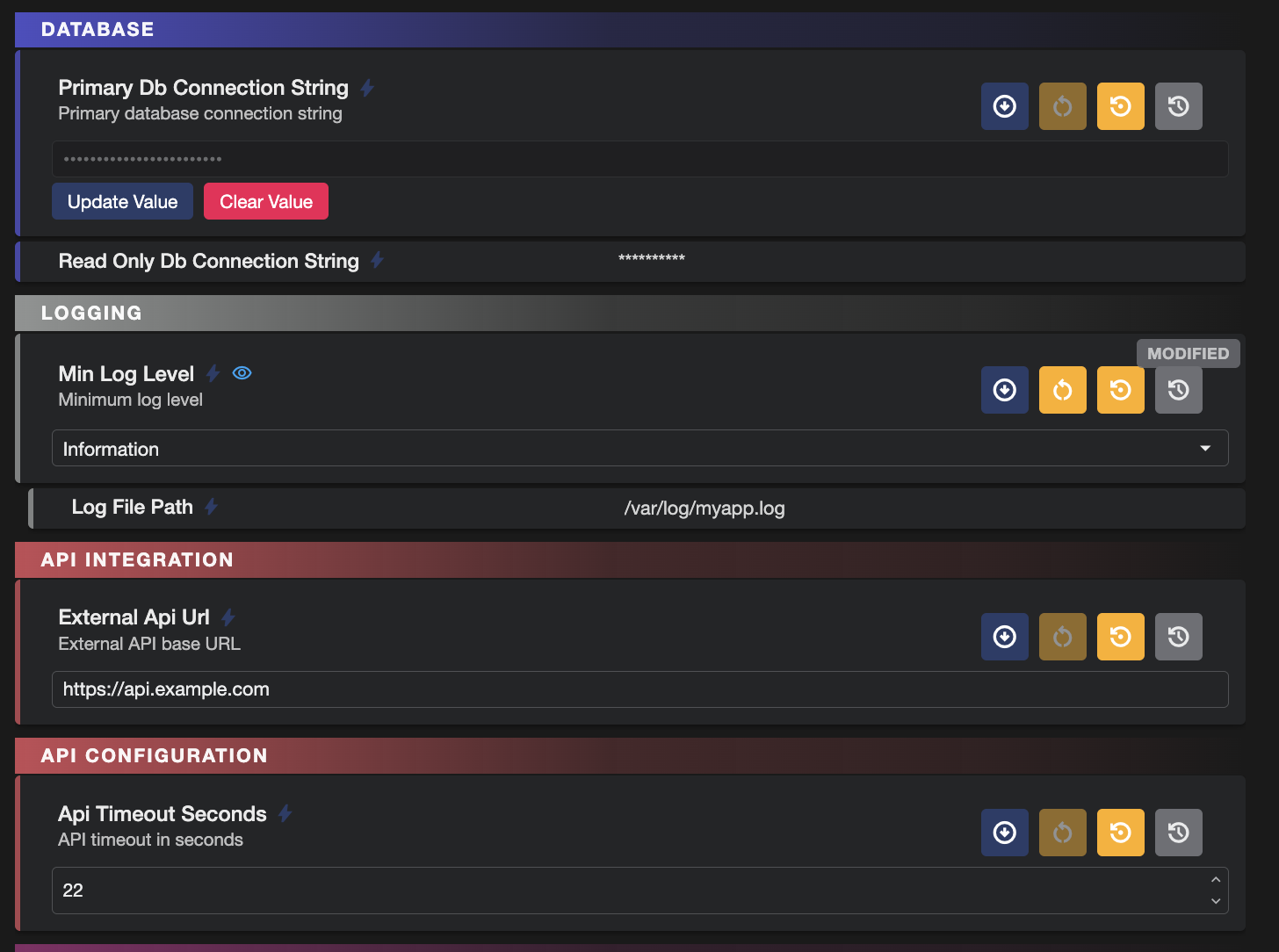
Your class is the schema.
Attributes decide the UI: secrets stay masked, enums become dropdowns, and validation runs before save. Hover a property to see the matching control.
using Fig.Client.Abstractions.Attributes;
using Fig.Client.Abstractions.Data;
using Fig.Client.Abstractions.Validation;
public class Settings : SettingsBase
{
}
Live reload
Save once. Clients pick it up on their next poll.
No restart, no redeploy. Fig Web shows which sessions are current while they catch up.
MinLogLevelInformation
Waiting for poll
Waiting for poll
Waiting for poll
Audit
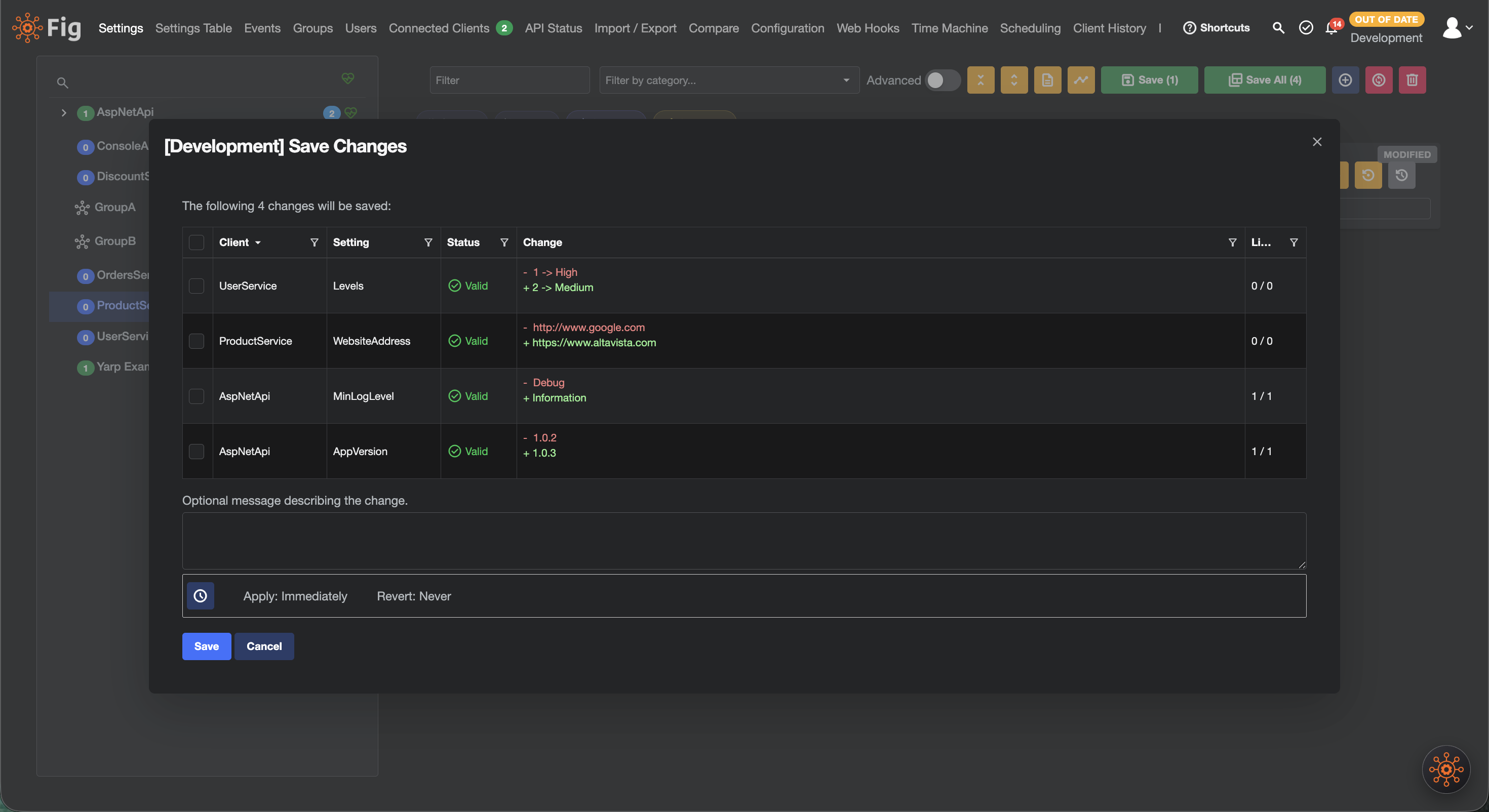
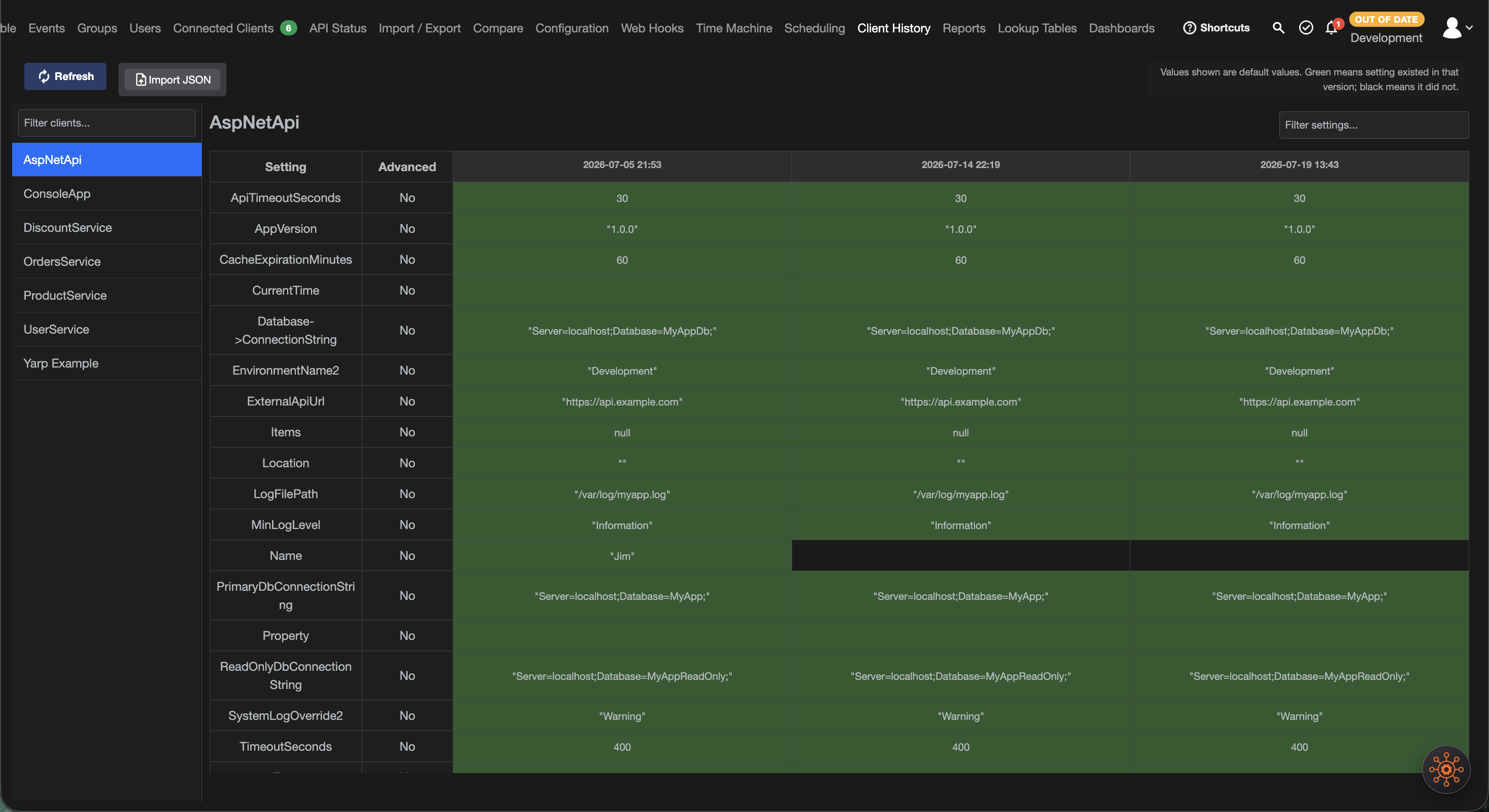
See what changed, and when.
Review the diff before you save. Then use history to see which values existed in each version — so you can audit a change or troubleshoot a breakage without guessing.
Apache 2.0
Open source. No per-request cloud tax.
.NET 10
Native configuration provider for ASP.NET.
Aspire
Run API and Web in your AppHost in one line.
Encrypted at rest
Setting values are encrypted in the database.
Secrets stay off the browser
Secret settings are never sent to Fig Web.
Offline cache
Clients start even if the API is unreachable.
Replace appsettings.json sprawl.
Add Fig.Client, run the API and Web, and manage every service from one place.